Nobody ever wakes up in the morning and dreams of visiting Stourbridge.
…But maybe they should.
Forget everything you think you know about Stourbridge.
If you’ve dismissed this Black Country town as just another sleepy stop on the map, you’ve missed the plot entirely. Beneath the surface of modern high streets lies a relentless history forged in back-breaking heat, lawless waterways, royal obsession, and deep-seated family tragedy. From global empires built on molten fire to the dark, murky canals that fueled Britain’s underworld, Stourbridge is a place of stark extremes—where industrial grit meets high-society prestige.
Tear back the velvet curtain: here is the dark, light, and utterly intoxicating truth about Stourbridge.
Whether you’re a history buff, a nature lover, or looking for a family afternoon out, here are three highlights you shouldn’t miss:
By Cone View by Gordon Griffiths, CC BY-SA 2.0, https://commons.wikimedia.org/w/index.php?curid=176620429
1. Uncover Royal Secrets & World Domination at Stourbridge Glass Museum
You can’t understand Stourbridge without understanding glass. Driven by Huguenot refugees escaping religious persecution in 17th-century France—who brought top-secret techniques and an obsession with local fireclay—this quiet corner of the Black Country rose to become the undisputed glassmaking capital of the world.
-
From Black Country Heat to Royal Palaces: Stourbridge glass wasn’t just industrial—it was elite luxury. Local master glassmakers like Thomas Webb & Sons and Stevens & Williams were awarded Royal Warrants, crafting exquisite crystal sets for Queen Victoria, King Edward VII, and international royalty. The famous Cameo Glass created here was so labor-intensive and flawless it rivaled ancient Roman treasures, making Stourbridge glass the ultimate flex in royal courts across Europe and America.
-
What to Expect: Catch mesmerizing live glassblowing demonstrations from master craftspeople, marvel at 400 years of royal-worthy crystal, and trace how local artisans revolutionized global design.
-
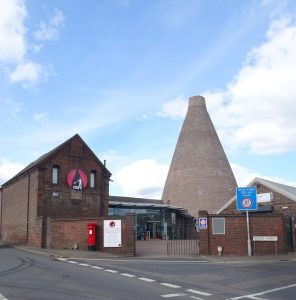
Don’t Miss: Just down the road stands the colossal 100-foot-tall Red House Glass Cone—one of only four surviving glass cones in the entire UK, standing as a monumental chimney to the area’s smoky industrial peak.
-
Don’t Miss: Just down the road stands the 100-foot-tall Red House Glass Cone, one of only four surviving glass cones in the UK!
-
Plan Your Visit: Check opening times and exhibition details on the official Stourbridge Glass Museum Website.
By Julian Osley, CC BY-SA 2.0, https://commons.wikimedia.org/w/index.php?curid=13622896
2. Walk the Lawless Waterways: Stourbridge Canal & Bonded Warehouse
Forget quiet Sunday walks—these towpaths were once the hyper-kinetic, murky arteries of the Industrial Revolution, hauling coal, iron, and luxury crystal straight into the global market.
-
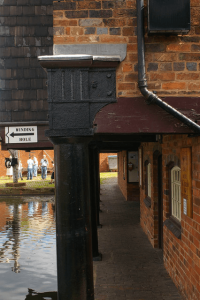
The Peaky Blinders Connection: Stourbridge’s canals feed directly into the vast Staffordshire & Worcestershire and Birmingham Canal networks—the exact waterways that made Thomas Shelby and the Peaky Blinders rich. These towpaths weren’t just for cargo; they were lawless highways used for smuggling illicit goods, moving black-market cargo, and slipping between territories undetected by local police. Standing at the basin, it takes very little imagination to hear the heavy clatter of iron-shod boots and the rumble of coal barges hiding dark secrets.
-
Why the Bonded Warehouse Matched the Drama: Built in 1799, this massive multi-story brick landmark was a high-security vault. Goods brought in by canal—specifically high-tariff items like spirits, tobacco, and commercial goods—were held here “under bond” until duty was paid. It was a fortress of commerce right on the water’s edge.
-
What to See Today: The beautifully restored Bonded Warehouse now serves as a bustling cultural hub for open-air events, craft markets, and historic canal boat trips.
-
More Info: See what’s happening at the basin via the Stourbridge Navigation Trust.

3. Untangle the Tragic History of Mary Stevens Park
Widely regarded as the jewel of Stourbridge, this stunning public estate hides a story forged in deep local philanthropy, personal tragedy, and high-society clout.
-
Who the Hell Was Mary Stevens? The park wasn’t built by a monarch; it was gifted to the people of Stourbridge in 1931 by local industrialist and philanthropist Ernest Stevens in loving memory of his late wife, Mary. The Stevens family made their immense fortune in enamelware and hollowware, but rather than hoarding their wealth, Ernest bought the grand estate of Norton House and converted its grounds into a public sanctuary so working-class families could escape the toxic smog of the factories.
-
Secrets, Rumors & Dark Moments: Beyond its beauty, the park holds wartime secrets—including air-raid shelters buried beneath the turf—and remains a textbook, prime example of interwar municipal design, complete with formal ornamental gates, a grand bandstand, and classical war memorial structures.
-
Visitor Details: Check facilities on the official Dudley Council Mary Stevens Park Page.
📍 Exploring More Around the Area?
-
Looking for secret subterranean nuclear bunkers and historic cave houses? Read our guide to 3 Things to Do in Kinver & Drakelow!
Staying local? Have you ever taken a boat trip past the historic Bonded Warehouse? Share your favourite spot in the comments below!